Why Dogs Eat Grass (and Why You Might Notice It More in Spring)
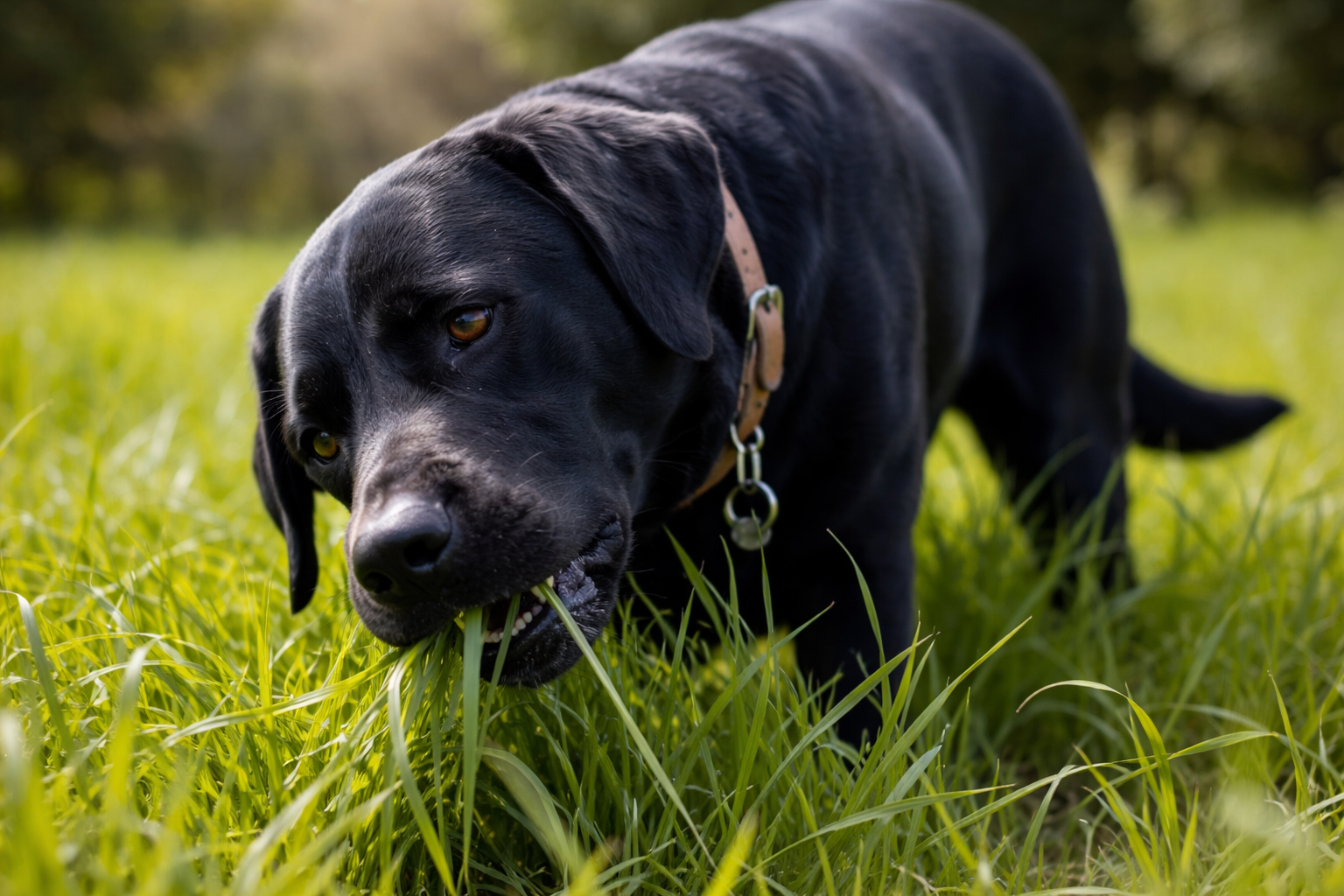
You are out on a walk and your dog suddenly drops their head and starts munching grass.
Most guardians have seen it happen and it often leads to the same question. Is something wrong with my dog?
A lot of people have heard that dogs eat grass because they feel sick or because they are missing something in their diet. In reality, that explanation does not hold up very well.
Grass eating is extremely common in dogs and most of the time it is completely normal behaviour.
Dogs Eat Plants More Often Than People Realise
Researchers looked into this behaviour by surveying over 1,500 dog guardians about whether their dogs ate plants. The results were quite surprising.
Around two thirds of the dogs were reported to eat plants regularly, and grass was by far the most common one. Even more interesting was what happened before and after the behaviour.
Only a small percentage of dogs appeared ill beforehand, and most did not vomit afterwards.
That research was published in Applied Animal Behaviour Science and suggested that grass eating is usually just a normal behaviour rather than a sign that a dog is trying to make themselves sick (Sueda, Hart & Cliff, 2008).
In other words, most dogs that eat grass are not doing it because they feel unwell.
Dogs Are Opportunistic Eaters
Although dogs are often described as carnivores, they are actually very adaptable feeders.
Historically dogs survived by scavenging. That meant eating whatever food sources were available, which could include meat, scraps and sometimes plant material.
Wild canids also consume plant matter indirectly when they eat prey. So from a biological perspective, a dog occasionally eating vegetation is not particularly unusual.
For many dogs it is simply something interesting in the environment.
Why It Often Happens More in Spring
A lot of guardians notice their dog suddenly eating more grass around this time of year.
Fresh spring grass is very different from the tough grass you see later in summer. The new shoots are softer, higher in moisture and often slightly sweeter because of the sugars produced during early growth.
That makes them much easier to chew.
If you watch closely, many dogs are not pulling up big clumps. They are nibbling the tips of the fresh shoots, almost like grazing.
It is very similar to the way grazing animals seek out new growth in spring.
Sometimes It Is Just Exploration
Dogs explore the world in ways that can look strange to us.
They investigate through scent, movement and sometimes their mouths. Grass can simply be another texture or smell worth investigating.
On relaxed walks where dogs have time to sniff and move naturally through the environment, you will often see them interact with plants, soil, sticks and other things they come across.
A bit of grass eating can be part of that exploration.
Could It Help Digestion?
Grass contains fibre, so it may occasionally help move things through the digestive system.
That does not mean a dog is lacking nutrients. Most dogs eating a balanced diet are already getting everything they need.
It is more likely that grass is simply something dogs sometimes include in their diet when the opportunity is there.
When It Is Usually Nothing to Worry About
For most dogs, occasional grass eating is completely normal.
It is generally not a concern when:
your dog eats small amounts
it happens occasionally
they seem otherwise healthy
there is no repeated vomiting afterwards
Many dogs will grab a few blades and then carry on with the walk.
When It Might Be Worth Paying Attention
Like most behaviours, it is changes that matter more than the behaviour itself.
You may want to speak to your vet if:
your dog suddenly starts eating large amounts of grass
it happens very frequently
it is followed by repeated vomiting
your dog seems unwell in other ways
Those situations are much less common but worth checking out.
One Practical Thing to Be Aware Of
The main risk is not the grass itself.
It is what might be on it.
Grass treated with weed killers, pesticides or other chemicals can be harmful to dogs. Roadside verges and heavily maintained areas are more likely to have these treatments.
Natural areas and countryside are usually safer places for dogs to explore.
Reference
Sueda, K. L., Hart, B. L., & Cliff, K. D. (2008). Characterisation of plant eating in dogs. Applied Animal Behaviour Science. https://www.sciencedirect.com/science/article/abs/pii/S0168159107001827
Want to know more about Dave’s Dogs?
Head over to here to read about dog walking in Colchester.