Is My Dog Suitable for Group Walks?
Group walks can be brilliant for the right dog. They offer structure, enrichment, countryside space and steady company. But they are not for every dog, and that is completely normal.
The first thing to consider is how your dog genuinely feels about other dogs. Not how you wish they felt, not how they used to be, but how they are now. A dog suited to group walks is generally relaxed around others. They can walk alongside without constant excitement, they do not fixate, and they can move away rather than escalate. They do not need to play. In fact, the best group walk dogs are often the ones who are happy simply co existing.
If your dog becomes overwhelmed, reactive on the lead, guards space or struggles to regulate excitement, a group environment may feel stressful rather than enriching. Some dogs thrive in one to one walks where the focus is entirely on them. That is not a downgrade, it is just a better fit.
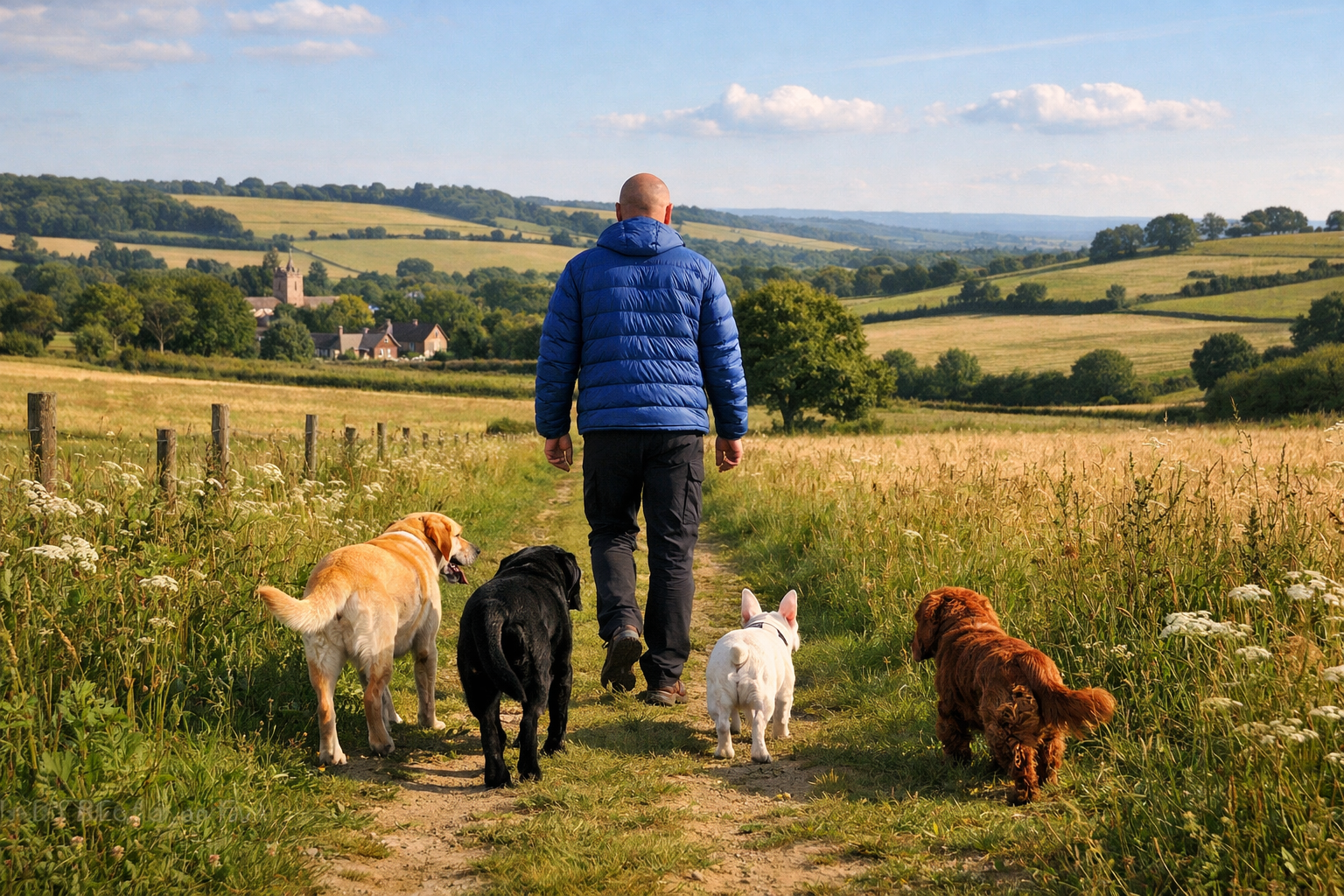
Recall and basic lead manners also matter. Your dog does not need to be perfectly trained, but they do need to come back when called and be comfortable having their lead put on and off. Group walks rely on clear communication and safety, especially in open countryside.
It is also worth thinking about physical and emotional readiness. Uneven terrain, longer routes and natural environments require a reasonable level of fitness. Emotionally, your dog should be able to cope with mild stress, bounce back quickly and stay thoughtful rather than impulsive.
Finally, matching is everything. Small, consistent groups create stability. Familiar dogs, steady energy and structure allow individuals to settle and actually enjoy the experience. Large, ever changing groups can easily tip dogs into over arousal.
The real question is not whether your dog is good enough for group walks. It is whether they will feel safe, calm and enriched in that setting. An honest assessment will always give you the answer.
Want to know more about Dave’s Dogs?
Head over to here to read about dog walking in Colchester.