The Risks of Overcrowded Dog Walks
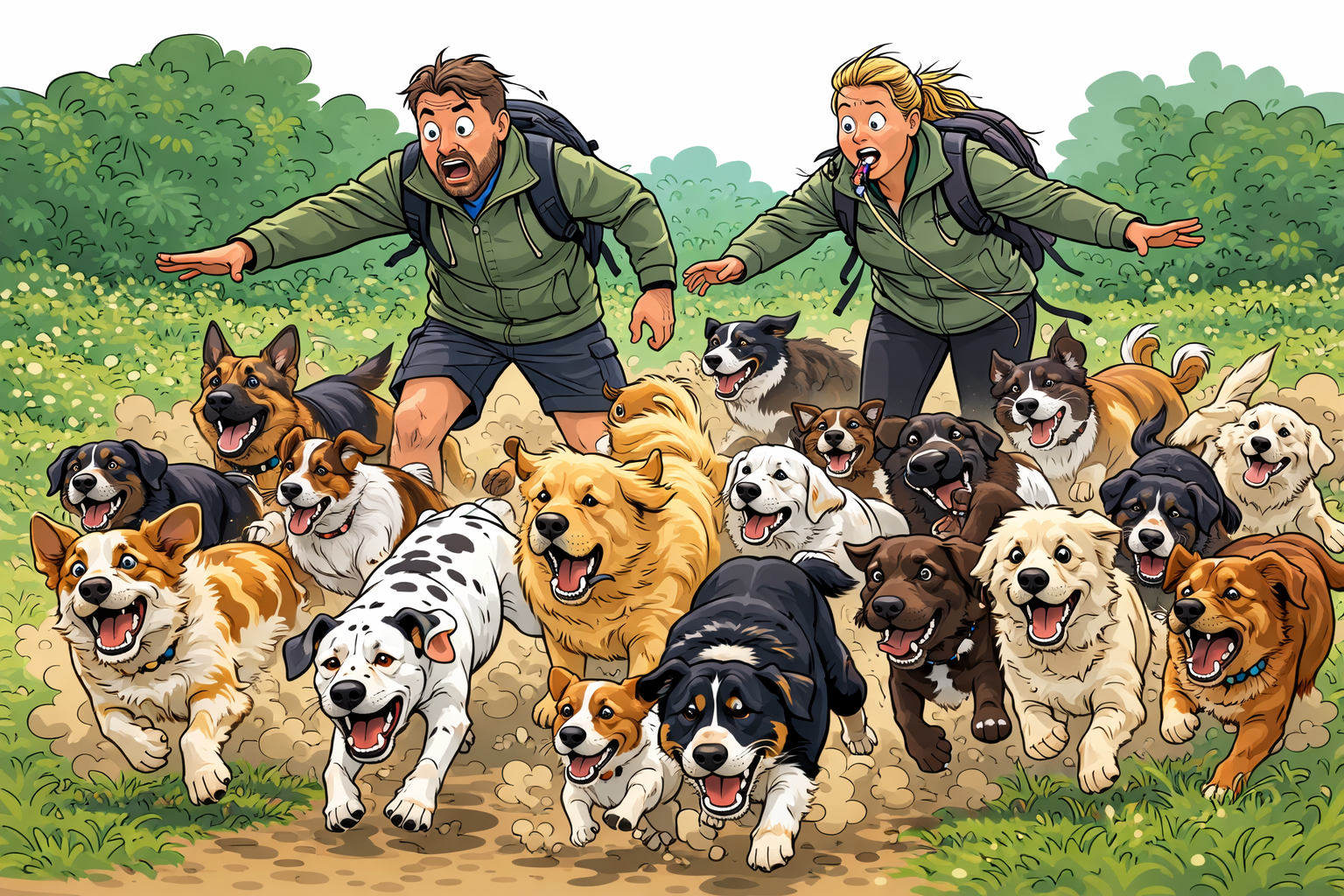
It is becoming more common to see dog walkers managing large groups at once.
From a distance it can look efficient. A cluster of dogs, one person, everyone moving in the same direction.
But when you look closer, large group walks carry behavioural, welfare and legal risks that are often overlooked.
This is not about criticising other businesses. It is about understanding what dogs need in order to feel safe and regulated, and what the law expects from the person responsible for them.
Supervision and Welfare
Dogs communicate constantly. Subtle body language, small shifts in posture, changes in breathing, eye contact, tension around resources. These signals happen quickly and quietly.
In large groups, those early signs are much easier to miss.
If tension builds between two dogs, intervention needs to be calm and immediate. When one person is responsible for many dogs at once, safe separation becomes more complicated. Meanwhile the rest of the group still needs to be managed.
Under the Animal Welfare Act 2006, anyone responsible for a dog has a legal duty of care to meet its welfare needs. That includes protection from pain, injury and distress. If overcrowding contributes to preventable harm, that duty of care may be called into question.
Control in Public Places
Excitement spreads quickly in groups. One dog reacting to a trigger can raise arousal across the whole group within seconds.
When arousal increases, recall reliability drops. Lead tension increases. Decision making worsens.
Under the Dangerous Dogs Act 1991, a dog must not be dangerously out of control in a public place. This includes situations where a person is injured, or where someone reasonably fears injury.
If a dog reacts, knocks someone over, or bites while under professional supervision, the person in charge at the time may be held responsible. Demonstrating effective control becomes harder as group size increases.
Road Safety and Environmental Risk
Managing a large group near roads, cyclists, livestock or busy public areas increases practical risk.
The Road Traffic Act 1988 includes offences relating to dogs on designated roads. If a dog strays into traffic and causes an accident, the person in charge can be liable.
There is also civil liability to consider. Injury to a member of the public, damage to property, or incidents involving livestock may all result in legal claims. In any investigation, questions around supervision and control are likely to be central.
Stress and Behavioural Fallout
Beyond legal risk, there is the emotional impact on the dogs themselves.
Large groups can easily tip into over arousal. What looks like excitement can actually be stress. Repeated exposure to chaotic group dynamics can:
Increase cortisol levels
Reinforce pulling and impulsive behaviour
Create reactivity around other dogs
Cause more sensitive dogs to shut down
Dogs do not simply need to burn energy. They need structure, predictability and the opportunity to make calm decisions.
Why It Matters
Professional dog walking carries responsibility. It is not just about getting dogs out for exercise. It is about meeting welfare needs, maintaining legal control, and safeguarding the public.
Smaller, carefully managed groups make it easier to observe behaviour, intervene early, and provide genuine enrichment.
When numbers grow too large, risk grows with them. For the dogs, for the public, and for the person holding the leads.
Want to know more about Dave’s Dogs?
Head over to here to read about dog walking in Colchester.